Exactly none of you have asked about how I foster kittens. Undoubtedly, this is because you’re all too bashful to ask. Never fear my darlings; here’s how to take care of the most historically unappreciated animal.
HOW HARD IS IT TO FOSTER KITTENS?
Here is an informative graph for your benefit.
Ease of Training
| Healthy | Sickly | |
| Tame Kittens | Easy as pie, if pie had super sharp talons | Easy, as long as the idea of dead kitties doesn’t bother you |
| Spicy Kittens | Moderately difficult. It’s like eating pie with filling made from stinging nettle. The challenge of domesticating kittens who wish me nothing but death entices me. | Meh? They mad but too sick to do anything about it. |
HOW TO FEED FOSTER KITTENS?
In addition to the kitten types graphed above, there are also bottle babies. These tiny things have been rescued without their mothers. Mama Cat might be absent for a variety of reasons, including sickness, death, or plain abandonment. Either way, bottle babies are brought into custody and are fed formula by syringe.
Some kittens are a bit older and can eat gruel (soft cat food or mush) while others go straight to the hard stuff: kibble.
HOW LONG DOES IT TAKE TO FOSTER?
In my organization, we foster the kittens until they weigh at least 2 pounds. (Typically around 10-12 weeks old.) When they’ve reached this milestone, they are ready to be spayed/neutered.
By coincidence, all of my fosters have been rescued at 8 weeks old. I usually keep them 3-4 weeks before surgery.
DO YOU FOSTER THE KITTENS AFTER SURGERY?
Nope. They go back to the shelter. Usually someone adopts them within a day or two.
HOW DO YOU DOMESTICATE THEM?
It’s a process and one that I’m still adjusting. Generally speaking, all kittens hang out in a quiet area of my house during their stay. They need a day to adjust to new surroundings, so I don’t pet or play with them yet.
Bathtime, however, is non-negotiable:

Good thing that cats don’t mind the water!

If the kittens are tame, then I’ll introduce them to my kids. It’s a bit shocking to be manhandled by human children. (The kittens would agree.) We start by sitting in a circle and taking turns holding a kitten. We use soft voices and stroke their heads. If a kitten wants to get down, then we respect that. The cat carrier is always right next to me, so the kittens can hide if they wish. Eventually, we progress to letting them explore sections of the house for longer periods of time. The cat carrier, food/water, and litter box are always accessible! (This means I have to tote these items from room to room, but it’s not a big deal.)
If the kittens are spicy, then we move even slower. I lean a lot on intuition here. I may just keep them in the carrier during family time. No petting allowed; just absorbing the sounds of a human home. This may take a week of exposure before we move into domestication. I use treats as rewards for letting me pet them without hissing/spitting. My kids eventually help with the treat rewards, too.
But intuition isn’t enough; you gotta read up on their body language. A quick review: Sometimes they hiss out of habit; sometimes they really mean “NO!”. Again, it’s intuition, but also understanding their body language. One time hissing might be a warning if I startled him by moving too fast. I can calm him by holding them by their scruff and offering a treat. Raised hackles, the creepy, sideways arch-thingy, and flattened ears are signs of a deeply frightened cat. This baby needs space.
However, if the kitty is hackles-raised-scared but needs her meds, I’ll grab her by the scruff, cradle her against my shoulder, and quickly pop the liquid down her throat. This is conflicting for a kitten. She enjoys the scruff hold but is pissed about the medicine. I help her out by repeat scruff holds and lickable treats 🙂
Once a kitten develops trust, you can get into the really fun part: playtime!
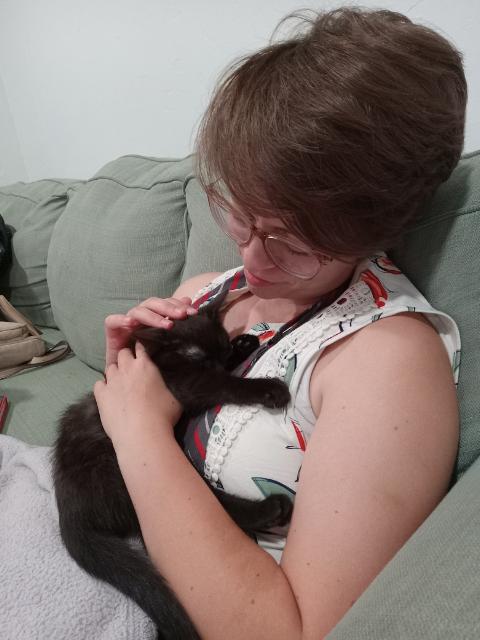
DON’T YOU WISH YOU COULD KEEP THEM?
There’s only been one kitten (out of 25) that I semi-regret not adopting. Ultimately, I don’t feel forever bound to them. The foster role is an “auntie” vibe position. Just cat-sitting and caring for them until they get their fur-ever home. 🙂
Please give fostering dogs or cats a try! There are so many animals who need a safe space to hang out until they’re spayed/adopted.
ANY QUESTIONS THAT I MISSED?
Comment and I’ll do a follow-up post 🙂
 The Jacobs Post